Industry insights — 17 June 2025 — 3 min read
Securing Worksites in Leeds- A Decade of Crime Trends and Drivers
Over the past ten years Leeds’ worksites have moved from being largely opportunistic targets to high value hunting grounds for organised thieves. Police recorded figures…
By Smart Watch Security
Over the past ten years Leeds’ worksites have moved from being largely opportunistic targets to high-value hunting grounds for organised thieves. Police-recorded figures show overall crime in the city jumping from 38,037 incidents in 2014 to 90,610 in 2024, with criminal-damage and arson offences alone reaching 7,295 in 2023 before sliding by a further 10 per cent in the twelve months to April 2025 (crimerate.co.uk, plumplot.co.uk). Industrial theft has tracked the construction boom even more sharply: business-premises burglaries (a close proxy for plant and tool theft) more than doubled between 2015 and 2023, settling at 5,738 cases last year, while the city recorded its highest-ever share of West Yorkshire’s machinery-and-tool crime in 2024 (crimerate.co.uk, directlinegroup.co.uk). The spike followed a 2019 peak in criminal-damage linked to the South Bank and East Leeds regeneration corridors, a brief Covid dip when sites were closed, and then a rebound as materials inflation made copper, diesel and catalytic converters irresistible.
Local conditions underpin the trend. Nomis labour-market data show that by the end of 2024 Leeds still had 11,800 unemployed residents (about 3 per cent on the APS measure) but, more tellingly, 143,000 working-age adults—almost 28 per cent—were classed as economically inactive, many in long-term ill-health or caring roles (nomisweb.co.uk). At the same time drug-related offences hit 2,795 in 2023, placing Leeds 16 per cent above the West Yorkshire average and deepening the nexus between dependency, debt-bondage and “low-risk-high-yield” thefts from vans and compounds (crimerate.co.uk). National research echoes that pressure: BauWatch’s 2024 Construction Crime Index found 70 per cent of site staff had witnessed a theft in the previous year and 62 per cent believed offences were becoming more sophisticated, often aided by drones and insider knowledge .
Government and civic partners have tried to break that cycle on two fronts. Prevention money is flowing through the Home Office Safer Streets Fund—West Yorkshire, including Leeds, secured the maximum £820,000 in Round 5 to extend CCTV grids, LED lighting and alley-gating in Armley, Hunslet and Morley up to March 2025 (gov.uk). Alongside the bricks-and-mortar fixes, the West Yorkshire Violence Reduction Partnership (VRP) has run public-health-style programmes that put youth-outreach teams and employment mentors into estate schools and industrial-estate fringes, using peer-research with 1,700 young people to shape diversion work (westyorks-ca.gov.uk, leaders-unlocked.org). On the night-time economy side, Safer Streets cash also underwrites the Women’s Night Safe Space Bus, operated with Gough & Kelly marshals; by mid-2024 it had helped more than 1,000 women, prevented 49 A&E admissions and generated police intelligence on 39 separate incidents (gough-kelly.co.uk).
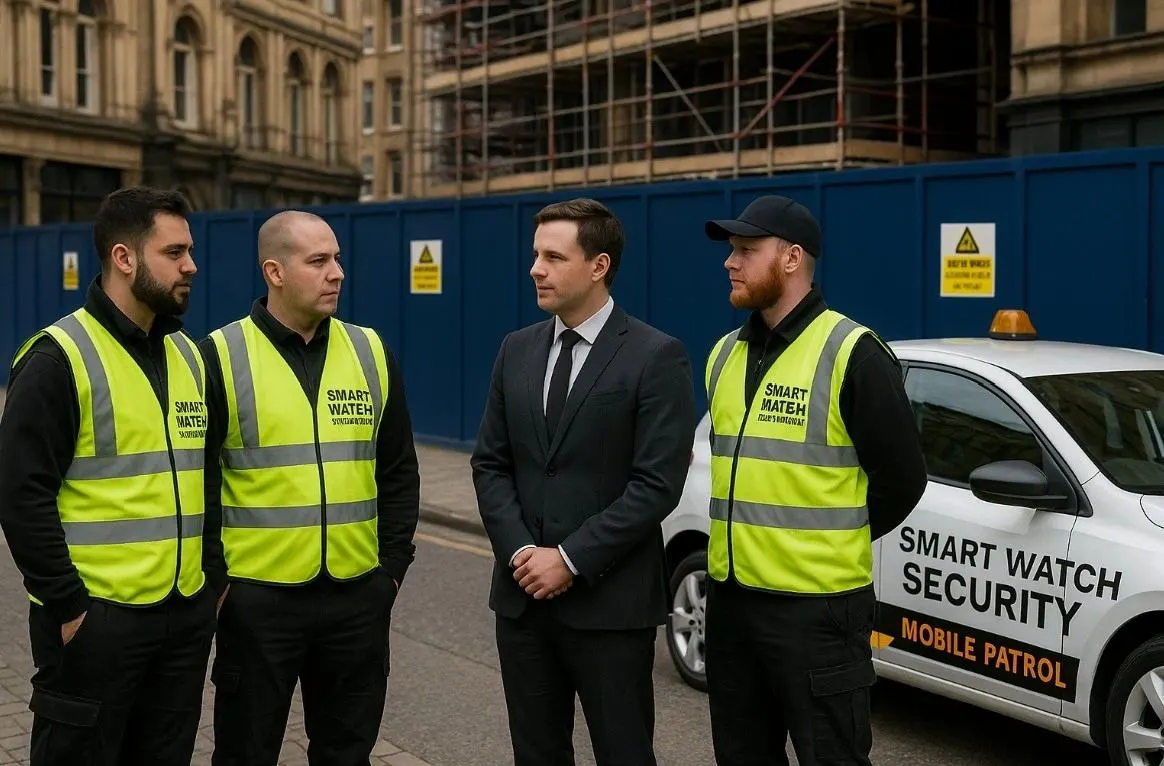
Crucially, private-sector security firms now plug the gaps that public budgets cannot cover round the clock. BauWatch’s solar CCTV towers—and AI siren pods now deployed on more than thirty Leeds sites—offer instant remote intervention and have been credited by contractors with cutting break-ins by up to 70 percent on protected plots . Smart Watch Security Ltd, a fairly new security company in Leeds, headquartered in Harehills, promises SafeContractor-accredited guards or waking-watch teams within four hours; one care-home client reported zero incidents in its first 120 days and a 15 per cent insurance-premium saving (smartwatchsecurity.co.uk). First Response Group provides integrated alarms, mobile patrols and temporary CCTV across major civils projects such as the East Leeds Orbital Route (firstresponsegroup.com), while Gough & Kelly supply both the Safe Space Bus crew and site-specific camera control from their Bramley hub (gough-kelly.co.uk). Even the University of Leeds has built a 24/7 patrol backed by the SafeZone personal-safety app, giving contractors on its £800 million campus redevelopment an incident-free 2023/24 build season (students.leeds.ac.uk). Taken together, these layered public-private measures show why criminal-damage is edging down and why worksites that invest in guard-and-sensor “stacking” now suffer far fewer expensive raids—proof that smarter security and social investment can bend Leeds’ crime curve, even as economic headwinds and the lure of high-value materials continue to test the city’s resilience.